
goatee
highlanders

2018.08.09.Thu | Recounting my cameras
I look at my old photos often; it’s why a take them. I was recently wondering how many cameras I’ve had over the years (see Twitter).
After a Canon Rebel film DSLR in the mid-1990s, my first digital camera was the Fujifilm MX-1700. It was great to have a camera where I could see immediate results. It had 1.5 megapixels and was okay in bright light, but it struggled hard with indoor shots: lots of noise and slow shutter speeds, resulting in lots of blur. But I still have some favorite photos from then (1999). The Fujifilm MX-1700 was an odd looking camera, with a vertical design, but with the move to digital, why retain a film-based design?
In 2002, I moved to the FujiFilm F601ZOOM. At 3MP, its photos have twice as many pixels. Low light was still a struggle, and dynamic range was limited with plenty of blown out highlights.

Still, I have hundreds of photos from the F601ZOOM, some of which were in very difficult circumstances, like this concert photo of Matisyahu.

In 2007, I upgraded to the FujiFilm F40f. It had a horizontal point-and-shoot form factor. Digital SLRs were a thing now, but I prefer easy to carry compact cameras. Your best camera is the one you have on you.
The F40f was a modern camera, with a respectable 8M pixels, decent dynamic range, and facial detection auto-focus. I’d often hop on my restored muscle bicycle with the banana seat and ride around Red Hook Brooklyn.

I really miss those evening rides.
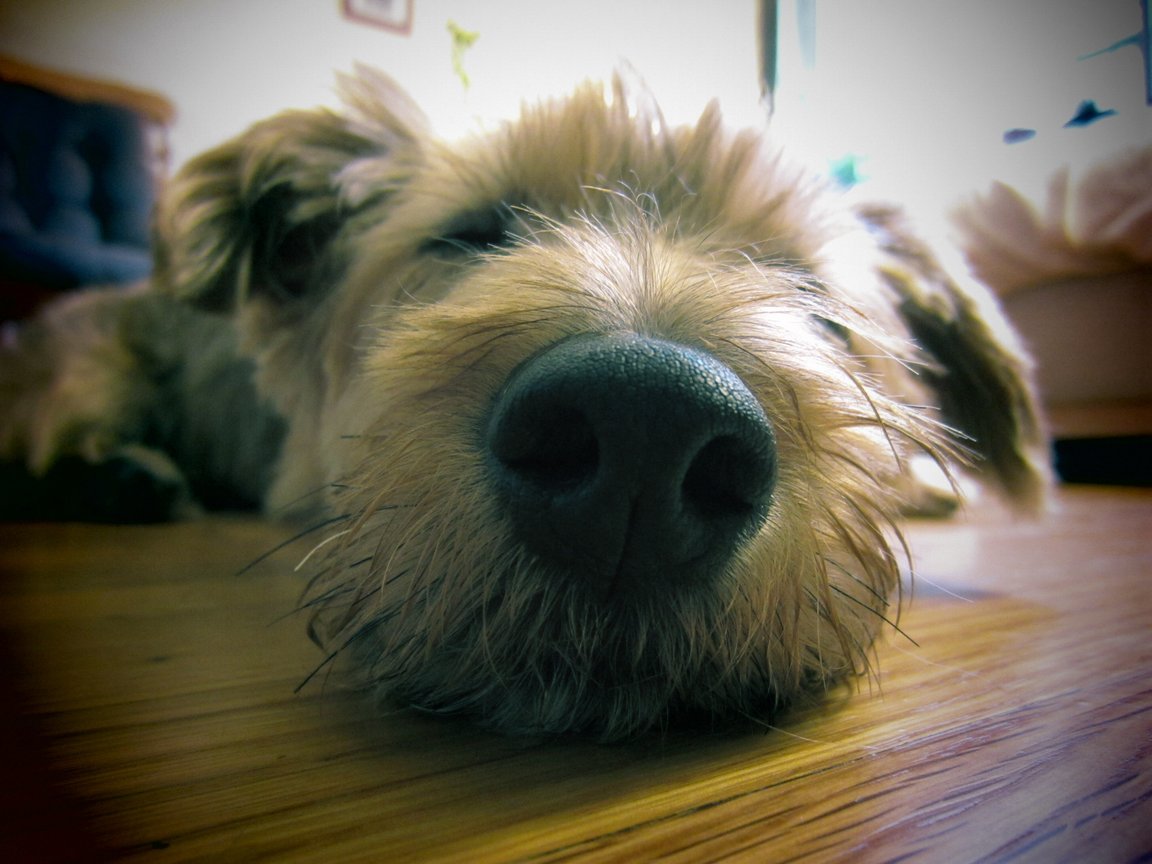
In 2011 features beyond megapixels started making a difference. I wanted to return to some of the manual control from film days but also go even smaller. I erred on the side of super compact: the Canon PowerShot ELPH 300 HS. It was so tiny it was awesome. 2011 was also the year a certain fuzzy critter makes an appearance in the albums.
The ELPH was also so tiny it was also only useful as a point-and-shoot. I returned to FujiFilm via the XF1 in 2012. The XF1 was my first camera to have a fake background blur that is now common on smartphones. Neat for photos of ginger beer bottles, but not for anything with a fuzzy edge.

I began 2013 with the Sony RX100. A tiny camera with a 1-inch sensor and viewfinder. The inch sensor meant excellent dynamic range, good low light performance, and some control over background blur (e.g., Casper taking a bath). Five years later, I still find its images beautiful.

In 2014 the perfect compact camera arrived, the Lumix LX100. It had a M4/3 sensor, fast zoom (f1.7 at wide) and manual controls! For years I dismissed complaints about dust getting inside to others’ carelessness. But it happened to me in 2017. I paid to have it serviced, took it to Prague this year, and the sensor dust was back.
I still use it when shooting with an open aperture (where the dust isn’t visible), and hope the rumors of a better sealed LX100ii are true.
This incident prompted me to get my first interchangeable lens camera in twenty years, the GX85. I can blow any dust off the sensor myself. I also enjoy using a telephoto lens.

That’s nine cameras (mostly inexpensive digital compacts) over twenty-three years. Not too bad in a hobby beset by GAS (gear acquisition syndrome).